
Refrigerator Not Cooling? Common Causes and What to Check
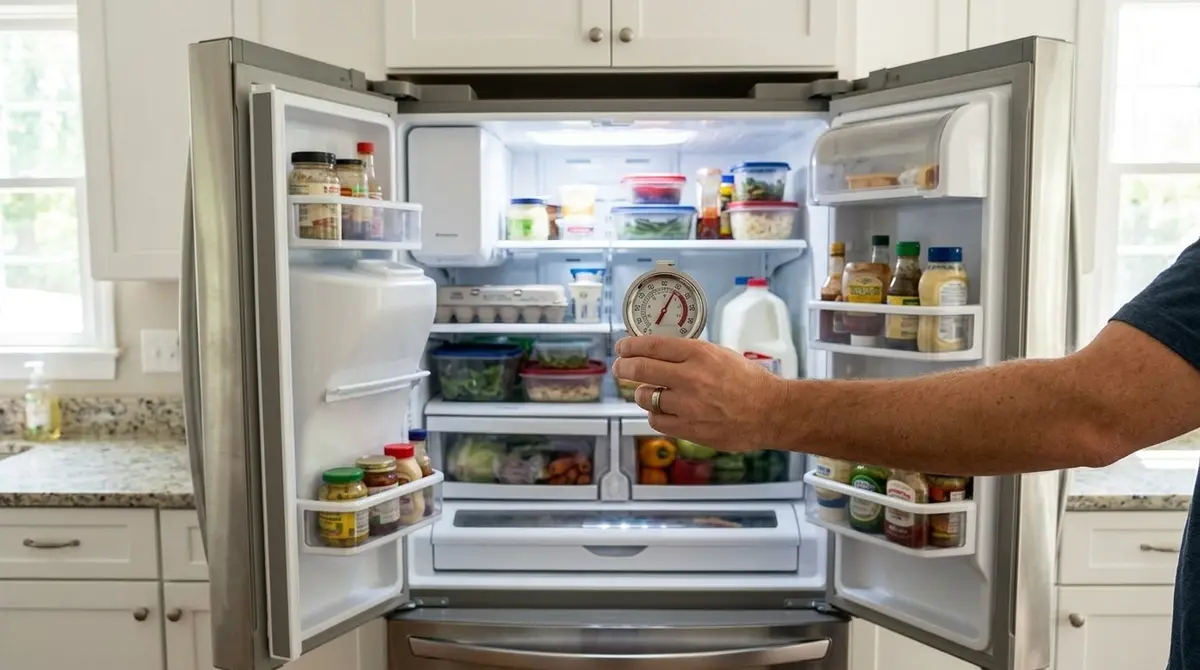
Start with five safe checks
Before assuming the worst, rule out the simple causes. These take about fifteen minutes and need no tools beyond a flashlight and a vacuum.
- Power and breaker. Confirm the cord is fully seated and the breaker has not tripped. A dead interior light points to the outlet or breaker, while a working light only proves the fridge has some power.
- Temperature setting. Controls get bumped when shelves are loaded. Most manufacturers recommend around 37°F for the fresh food section, and food safety guidance says it should stay at 40°F or below.
- Vents. Cold air enters the fridge through vents usually near the top or back wall. A gallon of milk or a stack of containers pressed against them can starve the whole compartment.
- Door seals. Close the door on a dollar bill. If it slides out with no resistance, the gasket is not sealing at that spot. Wipe the gasket clean, since sticky residue can keep it from seating.
- Condenser coils. Unplug the fridge, then vacuum the coils under the front grille or on the back. Dust and pet hair act like a blanket and keep the system from shedding heat.
Give the fridge 24 hours after any change before judging the result. An overpacked fridge also cools poorly, so thin out the shelves if air cannot move between items.
Fridge warm but freezer still cold
This is one of the most common refrigerator calls we get. In most fridges, all of the cooling happens in the freezer, and a fan pushes that cold air through a duct or damper into the fresh food section. When the freezer is fine and the fridge is not, the cold is being made but not delivered.
- Evaporator fan motor. If the fan behind the freezer's back panel stops, cold air never moves. A worn fan often squeals or clicks before it quits.
- Air damper. On many models a motorized or manual damper opens to let air into the fridge. If it sticks closed, the fridge warms while the freezer stays cold.
- Frost on the evaporator coil. A defrost failure lets ice build until it blocks the airflow path. You may see frost on the freezer's back wall.
- Temperature sensor or control board. If the board misreads the fridge temperature, it never calls for cooling.
Running a fridge in this condition forces the compressor to work longer, so it is worth acting before it turns into a no-cool problem.
Both compartments are warm
When the fridge and freezer are both above normal, the problem is usually on the heat-removal side of the system or in the compressor circuit.
- Dirty condenser coils are the most common and cheapest cause.
- Condenser fan motor. On fridges with coils underneath, a small fan near the compressor pulls air across them. If it is stalled, the compressor overheats and shuts off on its overload.
- Start relay or overload. A click every few minutes from the back, with the compressor never starting, often points here. This is a common and relatively affordable repair.
- Control board or thermostat. A failed board or thermostat may not send power to the compressor at all, or may leave it running constantly.
- Compressor or refrigerant leak. Less common than most people fear. Signs include a compressor that runs nonstop without cooling, a hissing sound, or oily residue on tubing. Sealed-system work involves regulated refrigerant and is never a DIY job.
Defrost system failures
Frost-free refrigerators melt frost off the evaporator coil several times a day using a heater, a defrost thermostat or sensor, and a timer or control board. When any of those fails, ice builds up on the coil until air cannot pass through it.
The giveaways are a thick layer of frost on the freezer's back panel, cooling that fades over several days, and a fridge that briefly recovers after being unplugged for a day. That temporary recovery happens because the ice melts on its own, which confirms the diagnosis but does not fix the cause. A technician tests the heater, the defrost thermostat and the board to find which part failed.
Other clues: noises and water on the floor
Sounds and leaks often travel with cooling problems, and they help narrow down the cause.
- Ticking or scraping from the freezer. Fan blades hitting ice, usually from a defrost failure.
- Loud buzzing or rattling from the back. A failing condenser fan, a loose drain pan, or a struggling compressor. Normal operation is a steady, low hum.
- Water under the crisper drawers or on the floor. A frozen or clogged defrost drain sends meltwater the wrong way. It is tied to the defrost system and often comes back if only the drain is cleared.
- Ice maker stopped along with cooling. Usually a symptom of the freezer warming, not a separate failure.
When to call a technician
Call for service if the fridge is still above 40°F a day after cleaning the coils and clearing the vents, if food is spoiling within a day, or if you hear clicking with no compressor start. Frost on the back panel, a fan that will not spin, or any sign of a refrigerant leak also need professional testing. In an Atlanta summer, a warm kitchen makes a struggling fridge fall behind faster, so do not wait for it to quit completely.
Do not chip ice off the coil with a knife or screwdriver, since puncturing a refrigerant line turns an affordable repair into a major one. Mr. Fixer technicians carry common fans, relays, defrost parts and boards on refrigerator repair calls, so many fixes are finished in the same visit. We service every major brand, including Samsung, Whirlpool and GE. Samsung owners can also read our Samsung refrigerator not cooling guide.
What affects the repair cost
The price depends on which part failed and how hard it is to reach. Relays, fan motors and defrost sensors are generally on the lower end. Control boards cost more, and sealed-system repairs such as a compressor replacement or leak repair are the most expensive, which is where comparing repair against replacement makes sense.
Brand and model matter too, since some manufacturers use proprietary boards and sensors. Our diagnostic fee is $80 and is credited toward the repair if you go ahead, and you get a written estimate before any work begins. Each fridge repair is covered for 60 days on parts and 60 days on labor. See our pricing page, or read our guide on repair vs. replacement if the fridge is older. To book, call (678) 866-3669 or schedule online.
Need it fixed?
Our technicians handle refrigerator repair across Metro Atlanta, usually the same day. Diagnostic from $80, credited toward your repair.
Call (678) 866-3669FAQs
Why is my refrigerator not cooling but the light is on?
The light runs separately from the cooling system, so a working light only proves the fridge has power. The usual causes are dirty condenser coils, a stalled fan, a failed start relay, or a defrost problem that has iced over the evaporator coil.
Can I fix a fridge that is not cooling by unplugging it?
Unplugging it for a day can melt ice off a frozen coil and restore cooling for a while, which suggests a defrost failure. The ice will return within days or weeks unless the failed defrost part is replaced.
How long can food stay in a refrigerator that is not cooling?
Food safety guidance says perishable food should stay at 40°F or below. Once the fresh food section rises above that, move milk, meat and leftovers to a cooler with ice and schedule service.
Is a warm refrigerator always a bad compressor?
No. Compressor failure is one of the less common causes. Fans, relays, defrost parts and dirty coils account for most cooling complaints, which is why a proper diagnosis comes before any talk of replacement.
More repair guides
Samsung Refrigerator Not Cooling: Causes and Fixes
When a Samsung refrigerator stops cooling, the most common cause is ice building up on the evaporator coil behind the freezer's back panel because par…
Read the guide →
Refrigerator Leaking Water? How to Find the Source and Stop It
Most refrigerator leaks come from one of four places: a clogged or frozen defrost drain, the water supply line or inlet valve that feeds the ice maker…
Read the guide →
Refrigerator Making Noise? Normal Sounds Versus Warning Signs
Refrigerators make a range of normal sounds, including a low hum, gurgling refrigerant, cracking ice and the click of controls. Noises worth attention…
Read the guide →