
Dryer Not Heating? Causes, Safe Checks and Fixes
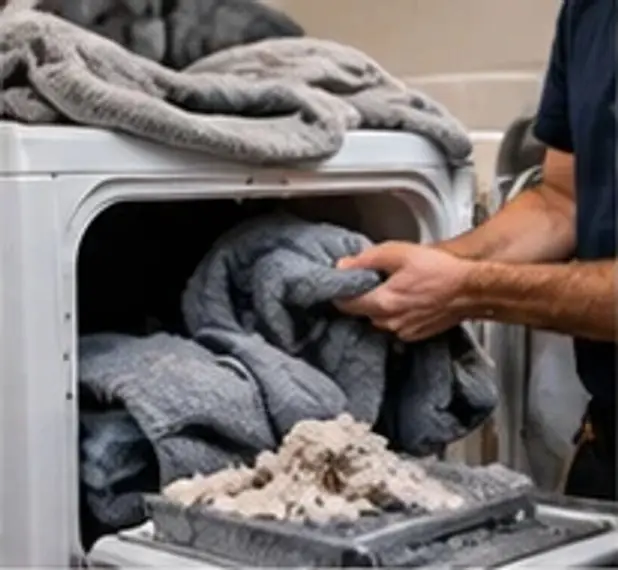
Three things to check first
- The breaker. Electric dryers run on a 240-volt circuit with a double breaker. If one half trips, the drum can still turn but the heating element gets no power. Switch the dryer breaker fully off, then back on.
- The cycle. Air fluff, air dry and some wrinkle-release cycles use no heat by design. Run a normal timed-dry cycle on high to test.
- The vent. Clean the lint screen, then go outside while the dryer runs and feel the exhaust. You should feel a strong stream of warm air. Weak or no airflow means a blocked duct, which can stop heat or cause the dryer to overheat and shut the heat off.
For gas dryers, also confirm the gas shutoff valve behind the dryer is open. If you smell gas at any point, do not operate switches, leave the home and call your gas utility from outside.
The common causes, part by part
- Blown thermal fuse. A one-time safety part that cuts heat when the dryer overheats. On many dryers it also stops the motor. A blown fuse almost always means airflow was restricted, so replacing it without clearing the vent leads to another blown fuse.
- Heating element (electric). The coil eventually breaks or shorts. Signs include no heat at all, or only mild warmth with very long dry times.
- Igniter or gas valve coils (gas). If you hear the dryer click and see a glow that never lights the burner, or no glow at all, the igniter or valve coils are the usual suspects. Gas component work should only be done by a trained technician.
- Cycling thermostat or high-limit thermostat. These control and cap the temperature. A failed one can kill heat entirely or make it cycle on and off erratically.
- Thermistor or control board. Electronic dryers use a sensor and board to manage heat. A failure can mean no heat with no error, or a panel that flickers or shuts the dryer down.
Other warning signs that need attention
Heat problems often show up alongside other symptoms that tell you more about what is failing.
- Burning smell. Turn the dryer off and unplug it. Lint near the heat source or a failing motor is a fire risk.
- Outside of the cabinet very hot. A sign of blocked airflow or a thermostat that is not cutting heat.
- Squealing, thumping or grinding. Worn drum rollers, idler pulley or belt. A broken belt usually means the motor hums but the drum does not turn.
- Dryer will not start. Door switch, thermal fuse on some models, the start switch, or power supply.
How to keep a dryer from overheating
Most no-heat repairs we see start with poor airflow, so prevention is mostly about air.
- Empty the lint screen before every load and wash it with soapy water occasionally, since fabric softener residue can clog the mesh.
- Have the full vent run cleaned once a year, more often for large households or long duct runs.
- Use rigid or semi-rigid metal duct, keep it short, and avoid crushing it behind the dryer.
- Leave a few inches of clearance behind and beside the dryer.
- Do not overload the drum. Clothes need room to tumble for hot air to reach them.
- Match heat settings to fabrics and use lower heat for lighter loads.
When to call a technician
Call for service once the breaker, cycle and vent are ruled out and the dryer still runs cold, or right away if you notice a burning smell, scorching on clothes, or any gas odor. Testing a thermal fuse, element or thermostat means opening the cabinet near live wiring, and gas dryers involve the gas valve, which should never be a DIY job. Also call if you already replaced a part and the heat did not come back, since the real cause is usually upstream.
Mr. Fixer handles gas and electric dryer repair for all major brands across Metro Atlanta, with same-day service in most areas. Our licensed and insured technicians check the venting as part of every no-heat call. If you own an LG, our LG dryer not heating guide covers that brand in more detail. Other brands we see often include Whirlpool, Maytag and Samsung.
Cost factors and repair or replace
Thermal fuses and thermostats are usually the least expensive fixes. Heating elements and gas igniters fall in the middle, and control boards are typically the costliest. Labor varies with how much of the cabinet has to come apart on your model.
Dryers are relatively simple machines, so a no-heat repair is usually well worth doing unless the drum, motor and bearings are also worn out. Our diagnostic fee is $80 and is credited toward the repair if you go ahead, you get a written estimate first, and repairs carry a 60-day parts and labor warranty. Call (678) 866-3669 or book online.
Need it fixed?
Our technicians handle dryer repair across Metro Atlanta, usually the same day. Diagnostic from $80, credited toward your repair.
Call (678) 866-3669FAQs
Why does my dryer run but not heat?
The most common reasons are a blown thermal fuse, a failed heating element or gas igniter, a bad thermostat, or half of a 240-volt breaker tripping on an electric dryer. A clogged vent is often the reason the fuse blew in the first place.
Can I just replace thermal fuse myself?
The fuse is a symptom of overheating, usually from a restricted vent. Replacing it without clearing airflow tends to blow the new fuse quickly, and it means working inside the cabinet near live wiring, so unplug the dryer and consider a professional diagnosis.
How often should a dryer vent be cleaned?
Clean the lint screen every load and have the full vent run cleaned at least once a year. Busy households, long duct runs or a vent with several bends may need it more often.
Is it safe to keep using a dryer that is not heating?
Running it on air-only cycles is generally fine, but stop using it if you smell burning, the cabinet gets very hot, or you notice any gas odor. Those signs point to a safety problem rather than a simple failed part.
More repair guides

LG Dryer Not Heating: Causes and What to Check
An LG dryer that tumbles but stays cold usually has a blown thermal fuse, a failed heating element or igniter, a bad thermistor, or a tripped thermal …
Read the guide →
Dryer Takes Too Long to Dry? Causes and Fixes
A dryer that needs two or three cycles to finish a load is usually held back by restricted airflow: a clogged lint screen, a crushed or lint-packed ve…
Read the guide →
Dryer Making Noise? Squeaking, Thumping and Grinding Explained
Dryer noises usually trace to a handful of wear parts: drum support rollers, the idler pulley, the drive belt, drum glides or bearings, and the blower…
Read the guide →