
Dishwasher Not Drying Dishes? Causes and Easy Fixes
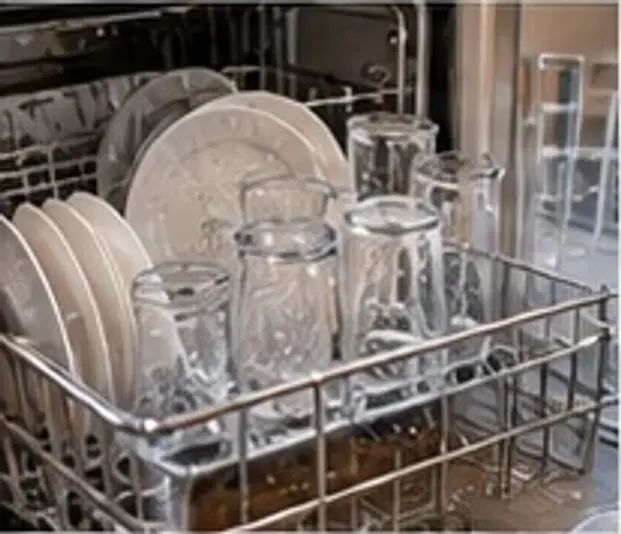
How dishwashers dry
Dishwashers dry in one of a few ways, and knowing which kind you have explains what to expect.
- Heating element drying. A visible metal element in the bottom of the tub heats the air after the final rinse. Many models from Whirlpool, GE, Frigidaire and others use this method.
- Condensation drying. Many European-style dishwashers, including many Bosch models, use a very hot final rinse so dishes hold heat. Moisture then condenses on the cooler stainless steel walls and drains away. There is no exposed element in the tub.
- Fan or vent assisted. Some models open a vent or run a small fan to push moist air out at the end of the cycle.
Condensation models dry well but leave more droplets on plastics. Light moisture on plastic items is normal for them.
Settings and rinse aid
- Fill the rinse aid. Rinse aid helps water sheet off instead of beading. Without it, dishes stay wet and spotted. Most dispensers have an indicator light or window, often near the detergent cup.
- Turn on heated dry or extra dry. Some models default to an air-dry or energy-saving option. Check the cycle options on your control panel.
- Check the rinse aid setting. Many dishwashers let you adjust how much rinse aid is used. If dishes are wet, try a higher setting.
- Run hot water at the sink first. Before starting the dishwasher, run the kitchen faucet until the water is hot. Starting with hot water helps the final rinse reach its temperature.
Loading for better drying
- Angle cups, bowls and glasses so water runs off instead of pooling on the bottom.
- Do not nest items. Bowls stacked tightly and spoons spooning together trap water.
- Leave space between items so warm air can circulate.
- Place plastics on the top rack and expect them to be a little wet. Plastic does not hold heat like glass and ceramic.
- Unload the bottom rack first, so water from cups on top does not drip onto dry dishes below.
Cracking the door open for 15 to 30 minutes after the cycle ends lets steam escape and helps drying, especially with condensation models. Some newer dishwashers do this automatically, popping the door open a few inches at the end of the cycle. If yours has that feature, avoid closing the door right away.
Parts that can fail
If the dishwasher used to dry well and suddenly stopped, and your settings and rinse aid are fine, a part may be at fault.
- Heating element. On models that have one, a broken element means no heat for drying and often lukewarm wash water too. You may see a visible break or blister on the element.
- High-limit thermostat or temperature sensor. If the dishwasher cannot sense temperature correctly, it may not heat or may cut the heat early.
- Vent or fan. A stuck vent or failed fan keeps moist air inside the tub.
- Control board. The board turns the element and fan on; a fault there can stop drying even when the parts themselves work.
- Rinse aid dispenser. A dispenser that does not release rinse aid has the same effect as running without it.
Testing elements and thermostats requires checking continuity and voltage, which is a job for a technician.
Wet dishes plus other symptoms
Pay attention to whether drying problems come with other signs. Lukewarm dishes at the end of a wash, cloudy glasses, or food left on dishes may mean the dishwasher is not heating water properly. Our guide to dishwashers that leave dishes dirty covers that side.
Water standing in the bottom of the tub after the cycle is a drainage problem, not a drying problem. It leaves the tub humid, and dishes stay damp as a result.
When to call a technician
Call if dishes are still wet after you filled the rinse aid, turned on heated dry and adjusted loading, if the dishwasher no longer gets hot during the cycle, if you can see damage on the heating element, or if water is left in the tub. A technician can test the heater, thermostat, sensor, fan and board to find the cause.
Mr. Fixer handles dishwasher repair in Atlanta and the surrounding metro area for brands such as Bosch, KitchenAid, Whirlpool, GE and Frigidaire. The diagnostic is $80 and is credited toward the repair. To schedule, call (678) 866-3669 or use online booking.
Need it fixed?
Our technicians handle dishwasher repair across Metro Atlanta, usually the same day. Diagnostic from $80, credited toward your repair.
Call (678) 866-3669FAQs
Why are my Bosch dishwasher dishes still wet?
Many Bosch dishwashers dry by condensation, not a heating element. They depend on rinse aid and a hot final rinse, and plastics often stay slightly wet. Keep rinse aid filled, consider raising its setting, and open the door briefly after the cycle.
Does rinse aid really help dishes dry?
Yes. Rinse aid lowers water's surface tension so it sheets off dishes instead of beading. It makes a noticeable difference in drying and spotting, especially in dishwashers that use condensation drying.
Why do plastic items never get dry in the dishwasher?
Plastic does not hold heat the way glass and ceramic do, so moisture does not evaporate from it as quickly. Some water on plastics is normal. Placing them on the top rack and opening the door after the cycle helps.
More repair guides
Dishwasher Not Cleaning Dishes? Causes and Fixes
Dishes usually come out dirty because of a clogged filter, blocked spray arms, water that is not hot enough, or poor loading, and those are all things…
Read the guide →
How Much Does It Cost to Fix a Dishwasher in Atlanta?
In the Atlanta area, dishwasher repairs typically run roughly $120 to $450, depending on which part failed, the brand, and how long the job takes, wit…
Read the guide →
Dishwasher Leaking? How to Find the Source and Stop the Water
Dishwasher leaks usually come from the door gasket, the wrong detergent creating excess suds, a dishwasher that is not level, a cracked spray arm or l…
Read the guide →