
Dishwasher Not Cleaning Dishes? Causes and Fixes
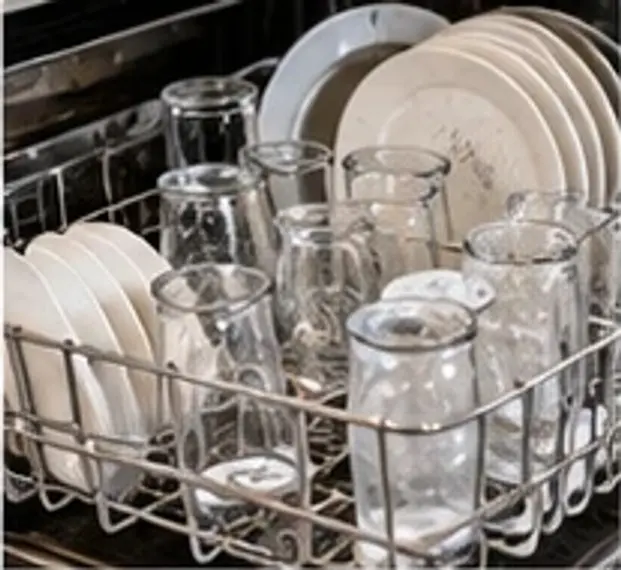
Read the residue: what the mess is telling you
The kind of residue on your dishes narrows down the cause quickly.
- Gritty film or food bits on glasses. Dirty water is being recirculated. Look at the filter, the drain path and the spray arms.
- Cloudy, white spots. Usually hard-water minerals or an empty rinse aid dispenser, not a mechanical failure.
- Greasy feel. Water is not hot enough, too little detergent, or the heater is not working.
- Top rack clean, bottom dirty (or the reverse). One spray arm is blocked or not spinning.
- Detergent pod still intact or caked in the cup. The dispenser door is blocked by a dish or not opening.
- Standing water in the tub after the cycle. A drain problem. Dishes will not get clean if the dirty water cannot leave.
Clean the filter and spray arms
Most modern dishwashers have a manual filter under the lower spray arm that needs cleaning every few weeks, and many owners do not know it is there. Twist it out, rinse it under warm water, and scrub the fine mesh with a soft brush. A clogged filter sends gritty water back over the dishes.
Next, pull off the spray arms, which usually unscrew or unclip. Hold them up to the light and clear any blocked holes with a toothpick. Spin each arm by hand once reinstalled; it should turn freely and not hit tall pans or utensils. Seeds, labels and broken glass are common culprits.
Water temperature, detergent and rinse aid
A dishwasher needs hot water to dissolve grease and activate detergent, generally at least 120°F at the tap. Check your water heater setting, and run the kitchen faucet until it is hot before starting a cycle so the first fill is not cold.
- Use detergent made for automatic dishwashers. Hand dish soap creates suds that can leak and leave a film.
- Follow the manual on the amount. Too much leaves residue, especially in soft water.
- Keep the rinse aid dispenser full. It reduces spotting and helps drying, and many models let you adjust the dose.
- If your water is hard, a dishwasher cleaner or descaling product every month or two helps keep mineral buildup off the spray arms and heater.
Loading and everyday habits
Poor loading causes more dirty dishes than broken parts. Scrape food into the trash, but there is no need to pre-rinse with most modern detergents. Face dirty surfaces toward the center and the spray, keep space between plates, and place fragile items on the top rack where the wash is gentler.
Do not block the detergent door or the spray arms with large pans or cutting boards. Run full loads rather than half loads to save water and energy, and wipe the door edges and gasket occasionally to prevent mold and odors. Avoid harsh household chemicals inside the tub, since they can degrade seals and racks over time.
A monthly routine that keeps dishes clean
Five minutes a month prevents most of the problems above.
- Filter: rinse and brush it, more often if you rarely scrape plates.
- Spray arms: spin each one by hand and clear any blocked holes.
- Cleaning cycle: run an empty hot cycle with a dishwasher cleaner, or with a cup of white vinegar set upright on the top rack, to cut grease and scale.
- Door edges and gasket: wipe away food and film, which is where odors and mold start.
- Rinse aid: top it off when the indicator shows low.
If your home is on well water or you see white scale on faucets, treat it as hard water and descale more often.
Parts that cause poor cleaning
If the filter, spray arms, water temperature and loading all check out, a component is likely failing.
- Wash pump or circulation motor. Weak spray, a humming sound, or arms that barely move point here.
- Drain pump or drain hose. Standing water or slow draining. Check that the hose is not kinked under the sink and that a connected garbage disposal is clear, and if the disposal is new, that its knockout plug was removed.
- Water inlet valve. Too little water enters the tub, so dishes are barely wetted.
- Heating element or temperature sensor. Dishes come out greasy and wet.
- Detergent dispenser latch. The cup never opens.
- Door gasket. A worn or torn seal can leak and reduce wash pressure.
When to call a technician
Call for service if dishes are still dirty after a clean filter and clear spray arms, if water stands in the tub, if the dishwasher leaks onto the floor, or if it hums without spraying. Pumps, valves and heaters sit under the tub near water and wiring, so turn off power at the breaker before looking underneath and leave part replacement to a professional. A leak can damage subflooring and cabinets quickly, so do not run the machine while it is leaking.
Mr. Fixer provides dishwasher repair for every major brand across Metro Atlanta, including Bosch, KitchenAid and Whirlpool. Our diagnostic fee is $80 and is credited toward the repair, and you get a written estimate first. For a sense of pricing, see our guide on dishwasher repair cost in Atlanta. Call (678) 866-3669 or book online.
Need it fixed?
Our technicians handle dishwasher repair across Metro Atlanta, usually the same day. Diagnostic from $80, credited toward your repair.
Call (678) 866-3669FAQs
Why are my dishes still dirty after a full cycle?
The most common reasons are a clogged filter, blocked spray arm holes, water that is not hot enough, or dishes loaded so the spray cannot reach them. If all of those check out, a weak wash pump or a drain problem is likely.
How often should I clean my dishwasher filter?
Every two to four weeks for most households, more often if you rarely scrape plates. Check your manual, since some models use self-cleaning filters with a grinder instead.
Why does my dishwasher leave a white film on glasses?
White film is usually mineral deposits from hard water or too little rinse aid. Refill the rinse aid, use a dishwasher cleaner, and make sure you are not using too much detergent.
More repair guides
How Much Does It Cost to Fix a Dishwasher in Atlanta?
In the Atlanta area, dishwasher repairs typically run roughly $120 to $450, depending on which part failed, the brand, and how long the job takes, wit…
Read the guide →
Dishwasher Leaking? How to Find the Source and Stop the Water
Dishwasher leaks usually come from the door gasket, the wrong detergent creating excess suds, a dishwasher that is not level, a cracked spray arm or l…
Read the guide →
Dishwasher Not Drying Dishes? Causes and Easy Fixes
Wet dishes at the end of a cycle are often caused by an empty rinse aid dispenser, a heated dry option that is turned off, loading that traps water, o…
Read the guide →