Microwave Not Heating? Safe Checks and When to Get It Repaired
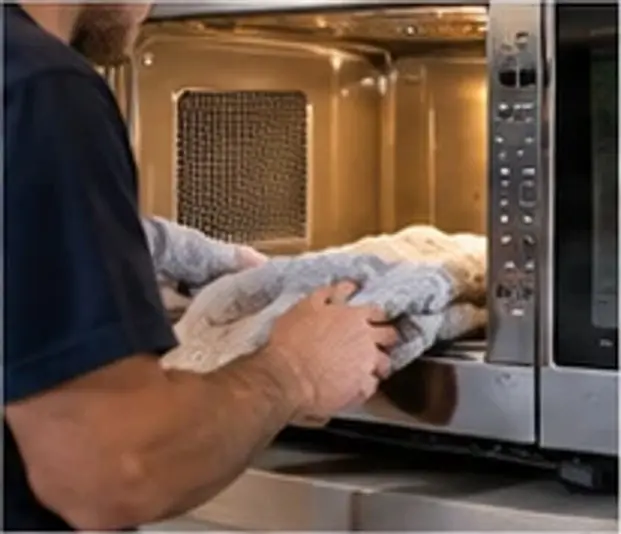
A safety warning first
Microwave ovens contain a high-voltage capacitor that can store a lethal electrical charge long after the unit is unplugged. Do not remove the outer cabinet, the vent grille panels or the control panel to look inside. Every check in this guide is done from the outside.
If you see sparks inside the cavity, smell burning, or hear loud buzzing, stop the microwave and unplug it.
Check settings and modes
- Power level. If the power level was set low and not reset, food heats very slowly. Set it to high and try again.
- Demo or showroom mode. Many microwaves have a demo mode where the display and turntable work but nothing heats. Look for a demo indicator and check your manual for how to turn it off.
- Child lock. A locked control panel may not start at all, but it can be mistaken for a heating problem.
- Defrost and sensor cycles. These cycle power on and off. Test with a regular timed cook on high.
A simple water test
Pour one cup of room-temperature water into a microwave-safe glass or ceramic container. Heat it on high for one minute. On a working microwave, the water should be noticeably hot, and the temperature should rise substantially.
If the water barely warms, the microwave is not producing full power. If it heats normally, the problem may be the food, the container, or the cycle setting. Some containers absorb microwave energy and get hot themselves while the food stays cool. Dense or frozen foods also heat unevenly by nature, so stirring halfway through and letting food stand for a minute is part of normal microwave cooking.
Power and door checks
- Outlet and circuit. Microwaves need a dedicated circuit in many kitchens. If the breaker trips or the microwave shares a circuit with a toaster or coffee maker, it may not get full power.
- Extension cords. Avoid them. Plug the microwave directly into a wall outlet.
- Door closing. The door has several switches that must all close before the microwave can heat. If the door does not latch firmly, or needs to be pushed to start, a latch or switch may be failing. Do not try to adjust or bypass the switches.
- Restart. Unplug the microwave for a minute and plug it back in to clear control glitches.
What usually fails inside
These parts are inside the cabinet and are for a technician only.
- Magnetron. The part that produces microwave energy. When it fails, the light, fan and turntable run but nothing heats.
- High-voltage diode and capacitor. These feed power to the magnetron. A failure in either commonly causes a no-heat condition.
- Door switches. A failed switch can stop heating, blow a fuse or keep the microwave from starting.
- Thermal fuse or thermal cutoff. These shut the microwave down if it overheats.
- Control board. The board sends power to the high-voltage section; a relay failure there can stop heating.
Over-the-range and built-in models also need careful removal from the wall or cabinet, which adds to the job.
Signs that need immediate attention
Most no-heat problems are inconvenient rather than dangerous, but a few symptoms mean you should stop using the microwave right away and unplug it.
- Sparking or arcing inside the cavity. This can come from metal in the oven, but if it happens with an empty microwave-safe dish, the waveguide cover or interior coating may be damaged.
- A burning or electrical smell that is not from food.
- A loud hum or buzz that is much louder than usual when the microwave runs.
- A door that is bent, cracked or does not close evenly. The door seal keeps microwave energy inside the cavity.
- Repeated tripped breakers or blown fuses when the microwave starts.
Running a damaged microwave can turn a single part failure into several.
When to call a technician
Call if the water test shows little or no heating, if the microwave hums loudly or sparks, if fuses or breakers trip when you start it, or if the door must be pressed to make it run. All of these involve the high-voltage section and should not be touched at home.
Mr. Fixer provides microwave repair across Metro Atlanta for over-the-range, built-in and drawer models, including Sharp, GE, Whirlpool, Samsung and LG. Microwave diagnostics are $120 and are credited toward the repair. Call (678) 866-3669 or book online, and our prices page lists typical repair starting points.
Need it fixed?
Our technicians handle microwave repair across Metro Atlanta, usually the same day. Diagnostic from $80, credited toward your repair.
Call (678) 866-3669FAQs
Why does my microwave run but not heat?
When the light, fan and turntable work but food stays cold, the cause is usually the magnetron, high-voltage diode, capacitor or a door switch. Check the power level and demo mode first, then have it diagnosed.
Is it safe to open a microwave and replace parts myself?
No. The high-voltage capacitor inside can hold a lethal charge even when the microwave is unplugged. Leave internal repairs to a trained technician.
Is it worth repairing a microwave?
For built-in, over-the-range and drawer microwaves, repair is often worth it because replacement and installation cost more. A diagnosis gives you a written estimate to compare.
More repair guides
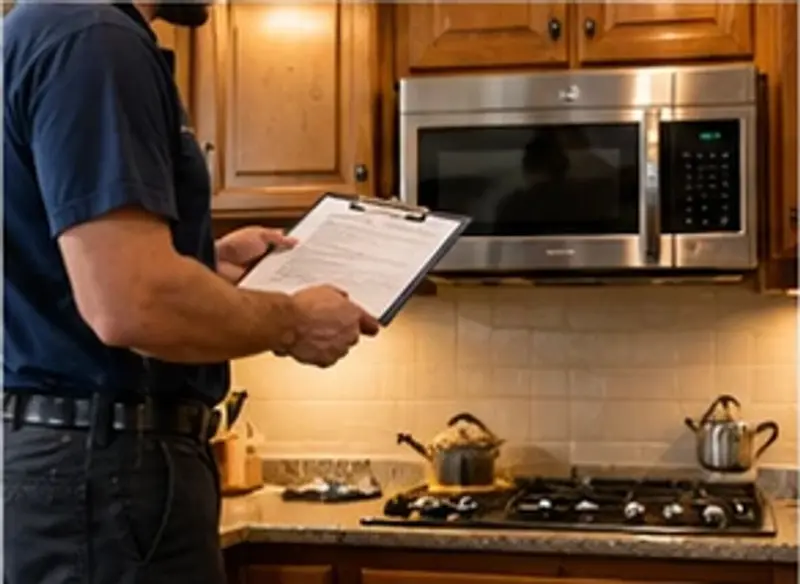
How Much Does Microwave Repair Cost in Atlanta?
Microwave repair at Mr. Fixer starts with a $120 diagnostic, credited toward the repair if you go ahead. Repairs on standard over-the-range, built-in …
Read the guide →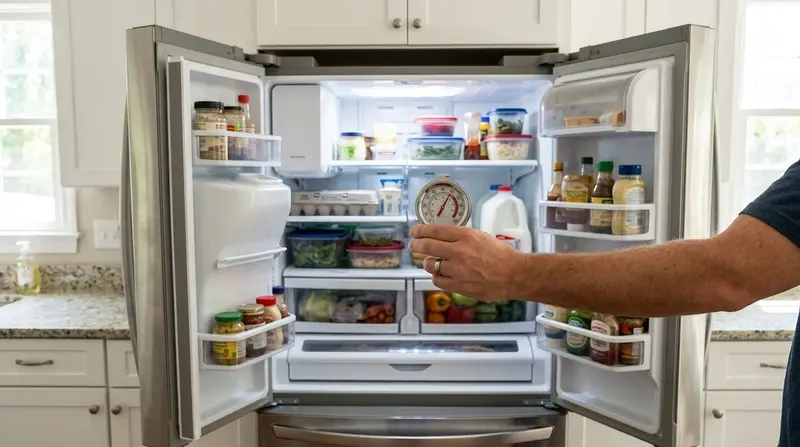
Refrigerator Not Cooling? Common Causes and What to Check
A refrigerator that stops cooling is most often dealing with dirty condenser coils, a failed evaporator or condenser fan, a defrost problem that has i…
Read the guide →
Samsung Refrigerator Not Cooling: Causes and Fixes
When a Samsung refrigerator stops cooling, the most common cause is ice building up on the evaporator coil behind the freezer's back panel because par…
Read the guide →