
Oven Not Heating? Causes and Fixes for Gas and Electric
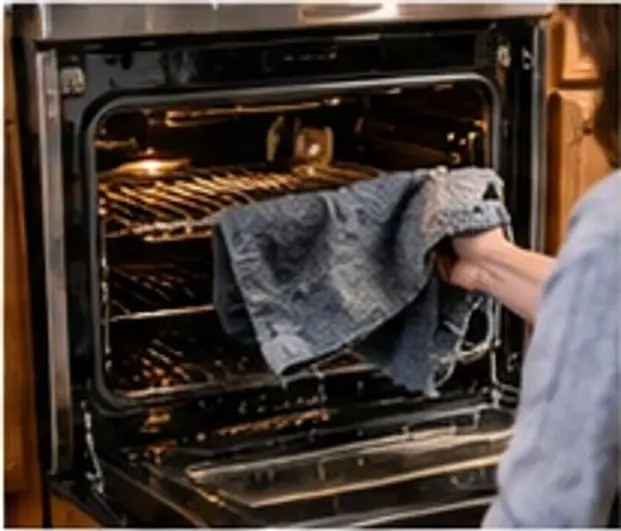
First, check settings and power
- Control lock, delay start or Sabbath mode. Any of these can make an oven look dead. Check the display and the manual for how to turn them off.
- Clock not set. On some ranges the oven will not operate after a power outage until the clock is set.
- Breaker. Electric ranges use a 240-volt double breaker. If one half trips, the display and cooktop may partly work while the oven stays cold. Switch the breaker fully off, then on.
- Power to a gas range. Gas ovens with an electric igniter need power to light, so check that the range is plugged in and its outlet has power.
If you smell gas at any point, do not touch switches or try to light anything. Leave the home and call your gas utility from outside.
Electric oven not heating
- Bake element. The most common cause. Look at the lower element with the oven off and cool. Blisters, a break, or a burnt spot mean it has failed. A telltale sign is an oven that broils but will not bake. On many newer ovens the bake element is hidden under the oven floor, so you cannot see it.
- Broil element. Bakes but will not broil, or heats slowly because the broil element helps during preheat on many models.
- Temperature sensor. The thin probe inside the oven, usually at the upper back, tells the control how hot the oven is. If it fails, the oven may not heat, overshoot, or show an error.
- Control board or relays. The board switches power to the elements. A failed relay can leave one element dead even when it is fine.
- Thermal fuse or high-limit. On many models a safety fuse opens if the oven overheats. The self-cleaning cycle runs very hot and is a common time for this to happen.
- Wiring and terminals. A burnt connection at the element terminal stops power from reaching it.
Gas oven not heating
- Weak igniter. The most common gas oven failure. Most gas ovens use a hot-surface igniter that glows and also opens the gas safety valve. As it ages, it still glows but no longer draws enough current to open the valve, so you see an orange glow and no flame.
- Gas safety valve. Less common, but if a good igniter does not open it, the valve may have failed. This is gas-train work and only for a trained technician.
- Spark ignition. Some ranges use a spark module instead of a glowing igniter. Constant clicking with no flame points to the module, electrode or valve.
- Gas supply. If the cooktop burners also will not light, the shutoff valve behind the range may be closed or there may be a supply issue.
- Temperature sensor and control. Same role as on electric ovens, and just as able to keep the burner from cycling on.
Oven heats but not to the right temperature
If the oven heats but food takes far longer or burns, place an oven thermometer in the center and compare it to the set temperature after a full preheat. Ovens cycle above and below the set point, so look at the average.
- A consistent offset can often be corrected with the calibration setting in the control menu on many models.
- A weak element or aging igniter heats slowly and may never reach high temperatures.
- A worn door gasket or a door that does not close fully lets heat escape.
- A failing sensor can read wrong and shut the heat off too early.
When to call a technician
Call for service if the breaker and settings are fine and the oven still will not heat, if a gas oven glows without lighting, if you see sparks or a damaged element, or if the oven stopped working after a self-clean cycle. Gas valves, igniters, wiring and control boards are not DIY repairs, and a range must be disconnected safely before anyone works behind it. If there is any gas odor, leave the home and call the gas utility first.
Mr. Fixer handles oven and cooktop repair and stove and range repair for gas and electric models across Metro Atlanta, with same-day service in most areas. We work on all major brands, including GE, Frigidaire, Whirlpool and Viking. Call (678) 866-3669 or book online.
What affects the repair cost
Bake and broil elements, igniters and temperature sensors are usually the more affordable repairs. Control boards, gas safety valves and professional-style or high-end ranges cost more, and parts for some premium brands can take longer to source.
Our diagnostic fee is $80 and is credited toward the repair if you go ahead, and you get a written estimate before any work begins. The repair is guaranteed for 60 days, parts and labor alike. For help deciding on an older range, see our repair or replace guide.
Need it fixed?
Our technicians handle oven & cooktop repair across Metro Atlanta, usually the same day. Diagnostic from $80, credited toward your repair.
Call (678) 866-3669FAQs
Why does my oven broil but not bake?
On an electric oven, that usually means the bake element has burned out, or the control relay that powers it has failed. On a gas oven with separate bake and broil burners, the bake igniter is the most likely cause.
My gas oven igniter glows but the oven does not light. Why?
Most gas ovens need the igniter to draw enough current to open the gas safety valve. An aging igniter can still glow but be too weak to open the valve, so no flame appears. It needs replacement by a technician.
Can the self-cleaning cycle break my oven?
The self-clean cycle runs extremely hot, and on many models it is a common point for a thermal fuse, sensor or control board to fail. If your oven stopped heating right after self-cleaning, mention that when you book.
Is it safe to replace an oven element myself?
Only with the breaker off, and only if you are comfortable with appliance wiring. Many elements are hidden under the oven floor or need the range pulled out. Gas components should never be a DIY job.
More repair guides
Oven Not Heating Evenly? Causes and Fixes for Uneven Baking
Uneven baking is often caused by rack position, pans that block airflow, a short preheat, or a door that is opened often. If those are ruled out, the …
Read the guide →
How Much Does Oven Repair Cost in Atlanta?
Oven repair pricing at Mr. Fixer depends on the type of oven. For a freestanding range oven, the diagnostic is $80 and repairs start from $180 plus pa…
Read the guide →
Refrigerator Not Cooling? Common Causes and What to Check
A refrigerator that stops cooling is most often dealing with dirty condenser coils, a failed evaporator or condenser fan, a defrost problem that has i…
Read the guide →